When a cat's tears are exposed to
air they turn a reddish-brown color, and if the tears spill onto the
fur they can cause unsightly staining, particularly on light-colored
animals. These tear stains are not really a health concern, but
many owners would just as soon treat them with pet meds.
"If you suspect any sort of problem
with your cat's eyes, the first thing you should do is make an appointment
with your veterinarian."
What Causes Tear Stains on Cats?
Tears protect and nourish the surface
of the eye. Under normal circumstances, the tears that are produced
drain away from the eye through small holes on the inner surface of
the lower lids, and very little, if any, staining of the fur around the
eyes occurs. However, certain circumstances can disrupt this normal
pattern:
- Overproduction of tears
- Blockage or abnormal development
of the ducts that drain tears
- Anatomical abnormalities
that promote spillage of tears (e.g., a cat with a very short nose and
prominent eyes)
Veterinary Care for Tear Stains
If you suspect any sort of problem
with your cat's eyes, the first thing you should do is make an appointment
with your veterinarian. Wounds, infections, ulcers, and other
serious diseases can cause increased drainage from the eye. Do
not overlook the possibility that an underlying problem may be the cause
of your cat's tear staining.
Tear Stain Home Care
Once more serious eye problems have
been ruled out, owners have several options for dealing with tear stains.
Keeping the fur around the eyes trimmed short and washing away the drainage
once or twice a day with a warm, wet cloth or eye rinse will keep staining to a minimum. If
more dramatic results are desired, oral
tear stain supplements are widely
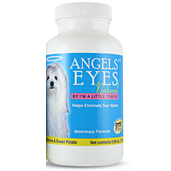
available. Some of the more popular products like Angels' Eyes contain the active ingredient tylosin, a
type of antibiotic. Although the long term use of tylosin appears
safe, owners should decide on a case by case basis whether such treatment
for tear staining is warranted.
The above is provided for information purposes only and should not be used for the diagnosis or treatment of any condition.
This information does not cover all possible variables, conditions, reactions, or risks relating to any topic, medication, or product and should not
be considered complete. Certain products or medications may have risks and you should always consult your local veterinarian concerning the treatment of
your pet. Any trademarks are the property of their respective owners.